May 1860
The Family Rosary
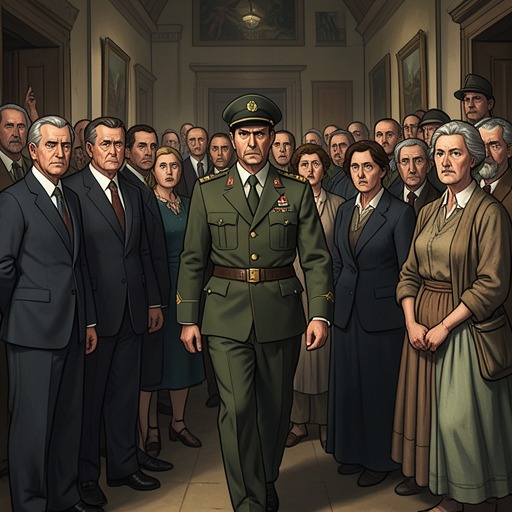
At [Villa Salina](entity:location-recall-location-villa-salina-b0c44a64b751), the family finishes its daily Rosary while the household’s religious ceremony gives way to restless children, irritated parents, and the returning Great Dane, [Bendicò](entity:character-recall-character-bendic-1afd59d888b8). The ritual frames a world of inherited privilege that seems orderly but is already troubled by political upheaval and private discontent.
[Don Fabrizio Corbera, Prince of Salina](entity:character-recall-character-don-fabrizio-corber-acca3d58b36a), presides over the household with imposing physical authority, while [Princess Maria Stella of Salina](entity:character-recall-character-princess-maria-stel-d59296913e8a) manages its children and conventions with a mixture of devotion and exasperation. The family’s old routines are about to collide with the revolution gathering beyond their walls.
May 1860
The Dead Soldier
Walking through the garden, Don Fabrizio remembers a young soldier found dead beneath a lemon tree after the recent fighting at [San Lorenzo](entity:location-recall-location-san-lorenzo-fa80e52c4fd2). The mutilated corpse had been treated as a repellent inconvenience, and the household’s brief prayer for the unknown man soon gave way to silence.
The memory unsettles the Prince because he cannot tell whether the soldier died for a cause anyone truly believed in. His uncertainty mirrors the fading legitimacy of the monarchy and the social order he has inherited.
May 1860
A Night in Palermo
After dinner, Don Fabrizio orders his carriage to [Palermo](entity:location-recall-location-palermo-b16a2f0e892c) and takes [Father Pirrone](entity:character-recall-character-father-pirrone-ad52290e0cd3) along, ostensibly to visit the Jesuit house. In reality, he goes to see his mistress, Mariannina, while the streets are tense with soldiers, rebels, and rumors of a landing.
On the journey back, the Prince feels both satisfied and disgusted with himself. At home he looks tenderly at the sleeping Maria Stella, but his divided desires and the threat of political change keep him awake until dawn.
May 1860
Tancredi Announces His Departure
The next morning, [Tancredi Falconeri](entity:character-recall-character-tancredi-falconeri-b21c685a8a34) appears while Don Fabrizio is shaving and reveals that he is leaving to join the insurgents in the hills. He jokes about the Prince’s night out, then turns serious: he fears that failure to act will bring a republic, and argues that preserving the old order requires change.
Don Fabrizio is alarmed by the danger but admires Tancredi’s nerve and political instinct. He gives his nephew money, accepting that the young man’s revolutionary adventure may help secure the family’s future.
May 1860
The Household Reads the Crisis
In the estate office, Don Fabrizio hears Don Ciccio Ferrara praise the coming upheaval and [Don Pietro Russo](entity:character-recall-character-don-pietro-russo-83c0df0aafc5) assure him that the Salina properties will remain safe. The Prince recognizes that the rising local class wants access to the old families’ wealth and status more than it wants to overturn society altogether.
He concludes that the newcomers will replace the aristocracy without fundamentally changing [Sicily](entity:location-recall-location-sicily-8d99f798a76e). This practical reading of the crisis steadies him, even as it exposes how little control the old rulers retain.
May 1860
News from Marsala
A letter from [Màlvica](entity:character-recall-character-m-lvica-5a6997344aa0) reports that [Giuseppe Garibaldi](entity:character-recall-character-giuseppe-garibaldi-aa6810ad64a2) has landed at [Marsala](entity:location-recall-location-marsala-05a93049fcec) and urges the Salina family to flee aboard a British warship. Don Fabrizio laughs at the panic, reads the official account, and assumes the Piedmontese will keep the volunteer force under control.
The landing makes the revolution impossible to treat as distant rumor. The Prince nevertheless returns to the family Rosary, trusting that events will alter appearances more than they alter the structure of power.
May 1860
Tancredi Joins the Revolution
Tancredi leaves [Villa Salina](entity:location-recall-location-villa-salina-b0c44a64b751) and joins the insurgents, telling his uncle he will return with the tricolour. He moves into the dangerous political world that the Prince has been trying to anticipate from the safety of his estate.
His choice is both genuine participation and calculated positioning. Don Fabrizio sees that his nephew’s adaptability may allow the Falconeri name to survive whatever government replaces the Bourbons.
May 1860
The Prince’s Political Reassurance
As the fighting approaches, Don Fabrizio discusses the upheaval with [Father Pirrone](entity:character-recall-character-father-pirrone-ad52290e0cd3) in the observatory. The priest fears the seizure of church property and the impoverishment of the poor; the Prince argues that institutions and classes adapt to circumstances and that the Church, unlike the aristocracy, can expect to endure.
Their disagreement reveals the different horizons shaping them: Father Pirrone thinks in terms of the Church’s permanence, while Don Fabrizio measures survival by what can last for his family and class. Astronomy offers the Prince an escape from both political argument and personal responsibility.
May 1860
Garibaldi Takes Palermo
Garibaldi’s forces defeat the Bourbon troops and take [Palermo](entity:location-recall-location-palermo-b16a2f0e892c), while the Prince watches the revolution’s effects from his own social world. Public enthusiasm, arrests, and the changing police force make the city’s transformation visible, but the Salina estate remains largely untouched.
Don Fabrizio sees the new authorities behave with the deference due to his rank. Their courtesy confirms his sense that political victory can coexist with social continuity, even as the old regime’s symbols disappear from public life.
June 1860
The Red General at Villa Salina
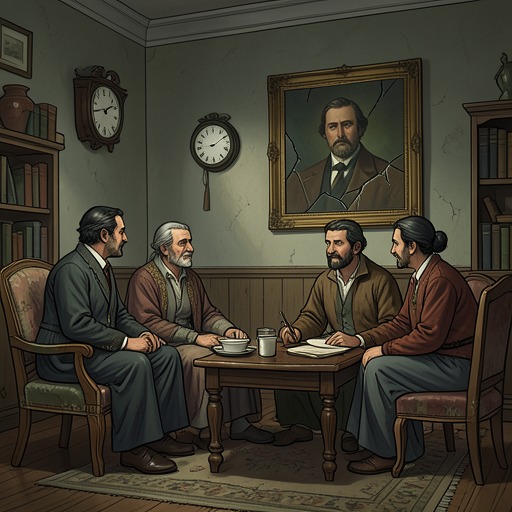
A Garibaldian general visits [Villa Salina](entity:location-recall-location-villa-salina-b0c44a64b751) to admire its frescoes, accompanied by an aide and Tancredi, now a wounded captain. The family has discreetly removed a portrait of the Bourbon king before the visitors arrive, replacing it with a religious image.
The visit is courteous and the general helps [Father Pirrone](entity:character-recall-character-father-pirrone-ad52290e0cd3) avoid expulsion. Don Fabrizio takes the episode as confirmation that the new rulers can be accommodated without surrendering the family’s standing.
August 1860
The Journey to Donnafugata
The Salina family sets out for its annual stay at [Donnafugata](entity:location-recall-location-donnafugata-82f2f040780f), traveling for days through a parched interior of dusty roads, exhausted horses, and sparse villages. Don Fabrizio welcomes the familiar estate as a refuge from [Palermo](entity:location-recall-location-palermo-b16a2f0e892c)’s political commotion.
The difficult journey also makes him feel the weariness accumulating in his life. His sense of continuity depends on returning to the palace and landscape he knows, even as the political world around them has already changed.
August 1860
The Prince Returns Home
At Rampinzeri, the family pauses beneath a battered stone leopard before continuing to [Donnafugata](entity:location-recall-location-donnafugata-82f2f040780f). Tancredi, who has ridden ahead, is spotless and charming despite his wound, and readily wins over his relatives and the exhausted travelers.
His polish contrasts with the harsh landscape and the dust covering the rest of the party. Even before the family reaches the village, he appears to have made the revolution another stage on which to display his social skill.
August 1860
A Welcome from Donnafugata
At the bridge into [Donnafugata](entity:location-recall-location-donnafugata-82f2f040780f), the local band plays while church bells ring and officials gather to welcome the Salinas. [Don Calogero Sedàra](entity:character-recall-character-don-calogero-sed-ra-8a0e99f2d0d0) appears as mayor with the new tricolour sash, and Tancredi presents himself as a hero of the campaign for [Palermo](entity:location-recall-location-palermo-b16a2f0e892c).
Don Fabrizio is pleased that the village seems familiar, but his unusually warm greetings and open invitation to local notables signal a change in his behavior. His prestige begins to yield, almost imperceptibly, to the authority of the rising bourgeoisie.
August 1860
The Palace Is Returned
[Don Onofrio Rotolo](entity:character-recall-character-don-onofrio-rotolo-ff358399e50a) welcomes the family to the palace and reports that he has maintained it faithfully. Don Fabrizio is moved by the steward’s honesty and by the familiar rooms, which seem to restore the security of his childhood.
The steward also tells him that Don Calogero has grown rich and politically powerful. The news complicates the Prince’s comfort: the world inside the palace appears unchanged, but the balance of influence beyond its doors has shifted.
August 1860
Angelica Enters the Palace
At the first formal dinner in [Donnafugata](entity:location-recall-location-donnafugata-82f2f040780f), Don Calogero arrives in a badly tailored evening coat and introduces his daughter, [Angelica Sedàra](entity:character-recall-character-angelica-sed-ra-d1c3d1e818c3). Her beauty and composure astonish the assembled family, and Tancredi is immediately captivated.
[Concetta Salina](entity:character-recall-character-concetta-salina-896285df54c9) watches their attraction with mounting pain, while Don Fabrizio is impressed by Angelica and unsettled by the social power of her father’s new wealth. The evening brings erotic desire and class change into the heart of the Salina household.
August 1860
Concetta’s Jealousy
During dinner, Tancredi divides his attention between Angelica and Concetta, but his desire for Angelica is unmistakable. Concetta fixates on her cousin’s gestures and on Angelica’s perceived shortcomings, hoping that some defect will turn Tancredi against her.
When Tancredi recounts a bawdy episode from the fighting in [Palermo](entity:location-recall-location-palermo-b16a2f0e892c) and makes a sexual joke to Angelica, Concetta rebukes him and leaves him stung. Her jealousy becomes a forceful but largely unspoken obstacle to the match she once hoped for.
August 1860
A Confession About Concetta
After the family arrives, [Father Pirrone](entity:character-recall-character-father-pirrone-ad52290e0cd3) tells Don Fabrizio that Concetta believes Tancredi loves her and wants guidance about a possible proposal. The Prince is surprised by her confidence and tries to postpone a conversation until the young woman’s hopes can be tested.
He privately weighs Concetta’s affection against Tancredi’s need for money and political prospects. His calculations foreshadow the painful choice between his daughter’s feelings and his nephew’s future.
August 1860
Concetta Bars Tancredi
During the family visit to the [Convent of the Holy Ghost](entity:location-recall-location-convent-of-the-holy-e9641c8702b0), Tancredi asks Don Fabrizio to use his inherited privilege to let him enter with the women. Concetta pointedly tells him to fetch a beam of wood, reminding him that he has already been in another convent and should not enter hers.
Tancredi is humiliated and left outside while the family goes in. The exchange deepens the rift between the cousins and helps extinguish the possibility that he will ask for Concetta’s hand.
August 1860
Tancredi Visits the Sedàras
After the convent visit, Don Fabrizio sees Tancredi crossing the square in his best clothes, followed by a servant carrying a box of peaches. The young man is going to the Sedàra house, where his attentions to Angelica are becoming a subject of village speculation.
The peaches mark the courtship as a visible, almost ritualized advance. Don Fabrizio understands that the old social boundaries will not prevent the two families from drawing together.
October 1860
The Unification Vote
Don Fabrizio reflects on the plebiscite in [Donnafugata](entity:location-recall-location-donnafugata-82f2f040780f) and remembers advising the local electors to vote yes, whether from political necessity or fear of the consequences of resistance. He believes many will privately vote against annexation despite the pressure to conform.
When he goes to cast his own vote, the procedure is already shaped by the town’s new authorities. His participation helps legitimize a political outcome that he regards as inevitable, though not necessarily just.
October 1860
The Unanimous Result
Don Calogero announces that every recorded vote in [Donnafugata](entity:location-recall-location-donnafugata-82f2f040780f) has favored union with the new state. The result is celebrated with speeches and fireworks, while Angelica applauds from her balcony and the village falls back into darkness.
The perfect tally troubles Don Fabrizio. He senses that the public celebration has concealed the destruction of honest political expression, although he does not yet know the specific fate of [Don Ciccio Tumeo](entity:character-recall-character-don-ciccio-tumeo-063080b1b64e)’s vote.
October 1860
Tumeo Reveals His Vote
While out shooting, Don Fabrizio asks [Don Ciccio Tumeo](entity:character-recall-character-don-ciccio-tumeo-063080b1b64e) how he voted. [Tumeo](entity:character-recall-character-tumeo-b5cda220b215) admits that he voted no, despite the Prince’s advice, because he remains loyal to the Bourbon rulers who once rewarded his family.
He explains that the officials swallowed his vote and reported it as yes. Don Fabrizio realizes that a new public order has begun by falsifying the first political choice offered to the people, and that the loss of good faith may matter more than the vote’s numerical effect.
October 1860
The Hunt and the Rabbit
On the same outing, Don Fabrizio shoots a rabbit and watches its life fade, recognizing in its futile struggle a resemblance to human beings caught in forces they cannot master. The landscape around [Donnafugata](entity:location-recall-location-donnafugata-82f2f040780f) seems older and more enduring than the political contest unfolding across the island.
As the Prince and [Tumeo](entity:character-recall-character-tumeo-b5cda220b215) rest, ants advance toward discarded food with the confidence of a conquering army. The scene turns the new political order into a miniature natural procession, indifferent to the hopes and defeats of individual lives.
October 1860
Tumeo Describes the Sedàras
Don Fabrizio asks [Tumeo](entity:character-recall-character-tumeo-b5cda220b215) what people in [Donnafugata](entity:location-recall-location-donnafugata-82f2f040780f) think of Don Calogero and his family. Tumeo describes the mayor’s wealth, political ambition, and brutal rise, then recounts the hidden poverty and roughness of Angelica’s family background.
His words make the marriage that Don Fabrizio has begun to contemplate seem socially audacious. Yet Tumeo praises Angelica’s beauty and intelligence, and the Prince recognizes that Tancredi’s match may be both a personal choice and a practical alliance.
October 1860
Tancredi’s Marriage Letter
Don Fabrizio receives a carefully composed letter in which Tancredi declares his love for Angelica and asks his uncle to seek her hand from Don Calogero. The letter dresses a financially necessary match in romantic language, while also arguing that new wealth should be joined to old family prestige.
The Prince admires the tact with which Tancredi allows him to remove the political argument if he shows the letter to others. He is pleased by the prospect of his nephew’s financial security, but resents having to negotiate the intimate arrangement with Don Calogero.
October 1860
The Prince Chooses Tancredi
Don Fabrizio tells Maria Stella about Tancredi’s request, prompting her to protest that he should have married Concetta. She blames the Prince for favoring his nephew and attacks Angelica and the match, until he asserts his authority and insists that he has already decided to proceed.
His decision favors Tancredi’s prospects over his daughter’s hopes. The exchange also reveals how the Prince uses paternal power to protect family strategy while avoiding a direct reckoning with Concetta’s disappointment.
October 1860
The Prince Meets Don Calogero
Don Calogero visits Don Fabrizio, who means to ask for Angelica’s hand on Tancredi’s behalf. Before he can control the conversation, he blurts out that his nephew is madly in love with Don Calogero’s daughter.
The mayor calmly reveals that the young couple have already been seen kissing in the garden. Don Fabrizio feels jealousy, social humiliation, and irritation at having been outmaneuvered, but continues the negotiation rather than abandon the match.
October 1860
The Dowry Is Disclosed
In the marriage negotiations, Don Calogero offers substantial estates and a vast sum in gold for Angelica’s dowry. Don Fabrizio is astonished by the scale of the fortune, which will restore Tancredi’s ability to live and compete in the new political order.
Don Calogero also announces that he is pursuing a noble title for his family. The exchange lays bare how wealth can purchase entry into aristocratic society, while the aristocratic house supplies prestige to the rising bourgeoisie.
October 1860
Angelica Is Welcomed as a Bride
Angelica makes her first visit to the Salina family as Tancredi’s fiancée. She greets Don Fabrizio with calculated warmth, calling him Nuncle, and charms the family with a display of affection that briefly eases the household’s tensions.
Concetta is especially affectionate, but her happiness is complicated by the knowledge that Tancredi has chosen another woman. [Bendicò](entity:character-recall-character-bendic-1afd59d888b8), unusually wary of Angelica, hides and growls, an instinctive note of unease beneath the family’s public welcome.
November 1860
Tancredi Returns in the Storm
During a violent storm, Tancredi arrives at the palace with [Count Carlo Cavriaghi](entity:character-recall-character-count-carlo-cavriag-779502555ab9) and his soldier-servant. The family rushes to greet him, and his return restores the affection and excitement that his absence had left behind.
He writes at once to Angelica to announce that he has returned and intends to visit her. Don Fabrizio approves the note, recognizing the young man’s gift for turning desire into charm and performance.
November 1860
Cavriaghi Courts Concetta
[Count Carlo Cavriaghi](entity:character-recall-character-count-carlo-cavriag-779502555ab9) gives Concetta a book of poetry and admits that he suffers from her indifference. She coolly dismisses his romantic confession as nerves and asks him to read a poem instead.
Tancredi has brought his friend partly in the hope that Cavriaghi might comfort Concetta, but her refusal shows that she is not ready to redirect her feelings. The count’s gentle courtship gives the household a quieter echo of the more consequential love triangle around Tancredi.
November 1860
Angelica Receives Her Ring
Tancredi shows the family a sapphire ring purchased with money supplied by Don Fabrizio. When Angelica arrives, he kisses her, places the ring on her finger, and publicly seals their engagement.
The gesture turns a negotiated alliance into a family celebration, while the Prince recognizes that Tancredi has skillfully secured both love and wealth. The ring also becomes a visible emblem of the joining of the Salina and Sedàra fortunes.
November 1860
The Palace Becomes a Playground
Tancredi begins leading Angelica through the vast, half-abandoned rooms of the [Donnafugata](entity:location-recall-location-donnafugata-82f2f040780f) palace. With a governess or Cavriaghi nearby to preserve appearances, the couple repeatedly lose themselves in corridors, hidden staircases, and forgotten apartments.
Their games of pursuit and concealment intensify their attraction while keeping it suspended short of marriage. The palace becomes an architecture of desire, its decaying rooms sheltering impulses the family’s public decorum cannot acknowledge.
November 1860
The Hidden Chamber
In the abandoned wing, Tancredi and Angelica discover a concealed apartment furnished with disturbing remnants of erotic discipline and sadism. Tancredi understands that they have stumbled on a secret center of the palace’s forgotten sensual history and quickly leads Angelica away.
The discovery changes the tone of their explorations. Their kisses become gentler, as if the room has exposed an inherited violence beneath the playful surface of their courtship.
November 1860
The Saint-Duke’s Whip
The lovers find a whip in the rooms of an ancestor who had practiced religious self-punishment. Tancredi links the instrument to the land that has passed out of Salina hands and toward the Sedàras through Angelica’s future inheritance.
Angelica kneels before a crucifix, and Tancredi’s rough kiss turns the scene into an unsettling fusion of piety, possession, and desire. The episode connects the family’s old rituals of blood and sacrifice to the new social exchange being made through their marriage.
November 1860
Their Desire Is Interrupted
As Tancredi and Angelica’s roaming grows more intimate, they approach the point of consummation in a secluded room. A church bell interrupts them, and both recover their self-command before their desire becomes an irreversible act.
Their restraint gives the courtship its most intense moments, and later memory will make these brief days seem more complete than the marriage that follows. The interruption preserves an ideal of love that ordinary life cannot sustain.
November 1860
The Lovers Resume Their Games
Though Tancredi and Angelica promise to behave more cautiously, they return to their games of hiding, pursuit, and touch. Their companions see the pair spending long stretches together, while the family’s formal concern for appearances remains largely ineffective.
Cavriaghi warns Tancredi that their conduct invites gossip, but the young man is too absorbed in the sensual tension to heed him. The couple’s restraint becomes a pleasure in itself, a brief interlude before marriage and the compromises of adult life.
November 1860
Cavriaghi Leaves Concetta Unmoved
Cavriaghi confesses to Tancredi that Concetta has not returned his affection and that he has not dared make a formal proposal. Tancredi tries to console him by describing Concetta as reserved and deeply Sicilian, while Cavriaghi accepts that his hopes are probably over.
The conversation exposes Tancredi’s confidence in his own future and his inability to understand how much his earlier attention mattered to Concetta. His marriage to Angelica is advancing, but the emotional cost to his cousin remains unaddressed.
November 1860
Chevalley Arrives
[Cavaliere Aimone Chevalley di Monterzuolo](entity:character-recall-character-cavaliere-aimone-ch-da3b50ecef16) arrives in [Donnafugata](entity:location-recall-location-donnafugata-82f2f040780f) on an official mission from the new government. His nervousness about brigands and unfamiliar customs contrasts with the controlled grandeur of the Salina palace, where Don Fabrizio receives him as a guest.
Chevalley’s arrival brings the new state directly into the Prince’s private world. The visit will test whether Don Fabrizio is willing to lend his name and experience to the political order he has watched replace the Bourbons.
November 1860
The Town’s Violence
Tancredi and Cavriaghi show Chevalley around [Donnafugata](entity:location-recall-location-donnafugata-82f2f040780f), and the Prince describes local murders, kidnappings, and a priest killed by poisoned communion wine. Chevalley tries to believe the stories are jokes and hopes that a modern police force will bring order.
Don Fabrizio’s tales puncture the visitor’s confidence in administrative reform. The conversation reveals a society where violence and silence persist beneath the surface of the new national institutions.
November 1860
The Senate Offer
Chevalley explains that the government hopes to nominate Don Fabrizio to the [Senate of the Kingdom of Italy](entity:organization-recall-organization-1abaca82f926). He presents the position as a chance for a respected Sicilian to help shape national laws and represent the island.
The Prince asks what the office would actually entail and listens without enthusiasm. His questions make clear that a title alone cannot persuade him to take part in a political system he considers already compromised.
November 1860
The Prince Refuses the Senate
Don Fabrizio refuses the Senate nomination and tells Chevalley that [Sicily](entity:location-recall-location-sicily-8d99f798a76e)’s history of foreign rulers has left its people exhausted and resistant to anyone who tries to set things in motion. He describes the island’s climate, landscape, and inherited habits as forces that have shaped a collective longing for sleep and stasis.
He also says that his generation is caught between the old world and the new, without the self-deception needed to govern. Rather than accept office, he recommends Don Calogero, whose practical ambition makes him better suited to the new state.
November 1860
Chevalley Sees the Poverty
Before leaving, Chevalley urges Don Fabrizio to help remedy the poverty and misery he has witnessed. The Prince answers that Sicilians consider themselves perfect and that outside reformers have repeatedly failed to rouse the island from its habits.
At dawn, Chevalley sees the squalor of [Donnafugata](entity:location-recall-location-donnafugata-82f2f040780f)’s streets and believes modern administration can change it. Don Fabrizio expects the same conditions to endure, imagining that new rulers will be jackals where the old ones were leopards and lions.
February 1861
Father Pirrone Returns to San Cono
[Father Pirrone](entity:character-recall-character-father-pirrone-ad52290e0cd3) travels to [San Cono](entity:location-recall-location-san-cono-487c95e39679) for the anniversary of his father’s death, returning to the family home and the rural world from which he came. His mother, sisters, and neighbors greet him warmly, and the familiar village revives memories of his earlier life.
The visit puts him among people who expect a clear judgment about the revolution and its consequences. Their practical fears differ from the Prince’s aristocratic calculations, forcing Father Pirrone to translate between social worlds.
February 1861
Village Grievances
At a gathering in his family home, [Father Pirrone](entity:character-recall-character-father-pirrone-ad52290e0cd3)’s neighbors complain about new taxes and regulations imposed by the emerging Italian government. The herbalist objects that he must pay to sell remedies made from plants he gathers himself, while the landowners fear the loss of church property and familiar forms of aid.
Father Pirrone shares their anxiety but also tries to explain how the aristocracy lives by its own inherited standards. His reflections reveal that nobles, clergy, and peasants inhabit different moral and material worlds, even when political change affects them all.
February 1861
Pirrone Explains the Nobility
The herbalist asks what Don Fabrizio thinks of the revolution, prompting [Father Pirrone](entity:character-recall-character-father-pirrone-ad52290e0cd3) to describe the nobles as a class shaped by generations of specialized memories, privileges, and fears. He argues that their indifference to ordinary concerns is not simply personal wickedness but a condition of their social world.
He also admits that each group despises those beneath it, including the clergy and the herbalists. His explanation does not erase injustice, but it clarifies why social change cannot be reduced to a simple contest between good and bad individuals.
February 1861
Sarina’s Secret
The next morning, [Father Pirrone](entity:character-recall-character-father-pirrone-ad52290e0cd3) finds his sister Sarina weeping over her daughter Angelina, who is pregnant and fears her violent father, Vincenzino. The young woman was seduced by Santino Pirrone, the son of Father Pirrone’s estranged uncle.
The affair is less a romance than the consequence of family hostility and fear. Father Pirrone sees that the pregnancy threatens to revive an old feud and decides that he must arrange a marriage before violence can follow.
February 1861
Pirrone Negotiates a Marriage
[Father Pirrone](entity:character-recall-character-father-pirrone-ad52290e0cd3) visits his uncle Turi and carefully presents the pregnancy as an opportunity for reconciliation between the divided branches of the family. Turi first denies the affair, then calls his son and gives his consent when he hears that half of the family almond grove may be offered as a dowry.
The priest also promises to surrender his own claim to part of the inheritance, helping to secure the arrangement. The negotiation shows him using tact and material compromise to contain the same kinds of desire, pride, and inheritance disputes that govern the Salina household.
February 1861
The Families Reconcile
Santino and Angelina formally visit Sarina’s home, dressed for the occasion and pleased with the prospect of marriage. [Father Pirrone](entity:character-recall-character-father-pirrone-ad52290e0cd3) has also calmed Vincenzino by promising to relinquish his claim to the disputed inheritance.
The reconciliation is practical rather than sentimental: the couple gain a future together, and the two branches of the family settle their conflict over land. Returning to [Palermo](entity:location-recall-location-palermo-b16a2f0e892c), Father Pirrone recognizes the familiar workings of desire and self-interest in both peasant and aristocratic life.
November 1862
The Family Prepares for a Ball
The Salinas travel to a ball at [Palazzo Ponteleone](entity:location-recall-location-palazzo-ponteleone-602167aaf98f) during a brief season of social festivities in [Palermo](entity:location-recall-location-palermo-b16a2f0e892c). The main purpose is to present Angelica to society as Tancredi’s future bride, while Don Fabrizio worries whether Don Calogero’s clothes and manners will withstand the scrutiny of the aristocracy.
The gathering is a public test of the marriage alliance. Angelica’s beauty and Tancredi’s social skill may open doors that the Sedàra name and wealth could not enter alone.
November 1862
Pallavicino’s Arrival
At [Palazzo Ponteleone](entity:location-recall-location-palazzo-ponteleone-602167aaf98f), the guests discuss [Colonel Pallavicino](entity:character-recall-character-colonel-pallavicino-d131140155b3), who stopped [Giuseppe Garibaldi](entity:character-recall-character-giuseppe-garibaldi-aa6810ad64a2) at [Aspromonte](entity:location-recall-location-b60b4c0af168) and wounded him. The colonel arrives to receive praise, his polished manner turning a politically awkward encounter into a story of military courtesy.
The scene shows how the new national order absorbs and reframes revolutionary conflict. Even the wounded Garibaldi can be honored in a society eager to celebrate its survival and smooth over its divisions.
November 1862
Angelica’s Society Debut
Angelica arrives at the ball in a striking gown and is warmly received by the [Palermo](entity:location-recall-location-palermo-b16a2f0e892c) aristocracy. Tancredi has coached her in the reserve and artful praise expected of the class she is about to enter, and she handles the gathering with impressive composure.
Her success confirms that beauty, money, and social instruction can bridge the gap between the Sedàras and the old nobility. Don Calogero’s new decoration is discreetly removed by Tancredi before it can undermine the effect.
November 1862
Don Fabrizio Watches the Ball
Moving through [Palazzo Ponteleone](entity:location-recall-location-palazzo-ponteleone-602167aaf98f), Don Fabrizio finds the rooms and guests increasingly alienating. The ballroom’s faded gold evokes the exhausted beauty of the Salina estates, and he sees the dancers as mortal beings enjoying a brief interval between birth and death.
When he encounters Tancredi and Angelica dancing together, disgust gives way to compassion. He recognizes that their ambitions and flaws do not cancel the tenderness between them, or their shared vulnerability to time.
November 1862
The Prince Dances with Angelica
Angelica asks Don Fabrizio to dance, and he accepts a waltz rather than the more strenuous mazurka. Moving with unexpected grace, he feels briefly returned to the energy of his youth and takes pleasure in the scent and warmth of Angelica beside him.
The dance sharpens his awareness that she belongs to a younger generation and that Tancredi will possess the future he can only revisit in memory. For a short time, however, he experiences the present as an extension of his vanished youth.
November 1862
Pallavicino Explains Aspromonte
At supper, Don Fabrizio speaks with [Colonel Pallavicino](entity:character-recall-character-colonel-pallavicino-d131140155b3), who explains why he obeyed orders to fire on Garibaldi at [Aspromonte](entity:location-recall-location-b60b4c0af168). He argues that the action prevented a wider intervention and helped expose the inept followers who had gathered around the revolutionary leader.
Pallavicino recalls that Garibaldi thanked him, making a personal gesture that complicates the public story of the encounter. Their conversation leaves Don Fabrizio uneasy about the divisions still running through the new Italian kingdom.
November 1862
Venus at Dawn
As the ball ends near dawn, Don Fabrizio refuses to return in the carriage and walks home beneath the fading stars. Venus, which has accompanied his early mornings for years, appears above the sea and revives his longing for a more permanent realm beyond earthly life.
The episode gathers his recurring reliance on astronomy into a private hope of escape. The stars offer order and predictability where human relationships and political arrangements remain unstable.
Around 1871
The Prince’s Decline
For more than a decade, Don Fabrizio has felt his vitality draining away in small, continuous increments. He interprets the loss not only as physical decline but as the possible rebuilding of his being into something less conscious and more enduring.
The sensation, once abstract and almost welcome, now intensifies into a bodily certainty. His long courtship of death, which Tancredi once recognized, is nearing its conclusion.
July 1883
The Journey to Palermo
At seventy-three, Don Fabrizio returns from [Naples](entity:location-recall-location-naples-13ce8e2c4961) after consulting a specialist, accompanied by Concetta and his grandson Fabrizietto. The exhausting journey through Calabria and [Sicily](entity:location-recall-location-sicily-8d99f798a76e) leaves him weak, and the anxious faces waiting at the station reveal the seriousness of his condition more clearly than the doctor’s reassurances.
He recognizes that his family understands he is dying. The revelation comes as a sudden inner crash, converting his familiar awareness of mortality into an immediate physical crisis.
July 1883
The Hotel Trinacria
Too weak to travel on to the family villa, Don Fabrizio is taken to the [Hotel Trinacria](entity:location-recall-location-ff2146c50e18). A local doctor treats him, and a waiter washes the soot and grime from his journey before he is settled in an armchair on the balcony.
From there he sees the sea and the distant hills, but his attention turns to the possessions and places he will soon leave behind. The once commanding Prince feels like a castaway, stripped down to his failing body and the sound of life escaping him.
July 1883
The Last Rites
Concetta insists that a priest be summoned, and Father Balsamo arrives with the Blessed Sacrament. Don Fabrizio accepts the last rites, but when he tries to confess, he finds that no single sin can account for a life he now regards as blameworthy in its entirety.
After receiving absolution, he is surrounded by family members, including Tancredi, who talks to him about politics and future plans. The Prince is grateful for the familiar voice but is already turning inward toward his own life’s reckoning.
July 1883
A Life Measured in Moments
As he lies dying, Don Fabrizio counts the moments that seem to have made up his real life: his marriage, the births of his children, conversations with Giovanni, hours in the observatory, and memories of Tancredi, his dogs, and [Donnafugata](entity:location-recall-location-donnafugata-82f2f040780f). He concludes that only a few years of his seventy-three-year life were truly lived.
The calculation reduces a long existence of duties and disappointments to a handful of intense experiences. It also reveals how completely the family’s identity has depended on memories that no successor can inherit in the same form.
July 1883
The Prince Dies
Don Fabrizio suffers another collapse and is moved from the balcony to his bed. Around him, his family weeps, while Concetta remains composed and Tancredi calls him his beloved uncle.
A young woman in a brown traveling dress appears to the dying Prince as the figure of Death, beautiful and ready to take him away. His final inner roar subsides, and Don Fabrizio dies.
May 1910
The Chapel Inspection Is Announced
At [Villa Salina](entity:location-recall-location-villa-salina-b0c44a64b751), the elderly Salina sisters receive the Vicar-General of the [Archdiocese of Palermo](entity:organization-recall-organization-97074a862990), who explains that the Cardinal intends to inspect their private chapel. Rumors have raised questions about the chapel’s celebrated painting and its collection of relics.
Concetta understands that the inspection threatens more than the objects themselves: it may damage the family’s remaining religious prestige. Carolina, by contrast, reacts with indignation at the suggestion that their devotions require official scrutiny.
May 1910
The Madonna of the Letter
The Vicar-General inspects the chapel and finds a painting of a beautiful young woman, which the Salina sisters venerate as the [Madonna of the Letter](entity:object-recall-object-6c696d04a62e). The sisters insist that the image has worked miracles, but the cleric regards it as an attractive painting rather than a sacred icon.
The image’s questionable identity anticipates the uncertainty surrounding the relics. The family’s inherited devotion is exposed as a mixture of sincere habit, social pride, and an elaborate collection whose authenticity has never been seriously tested.
May 1910
Angelica Visits Concetta
After hearing about the chapel inspection, Angelica visits Concetta and speaks about the coming celebrations for the fiftieth anniversary of the expedition. She has arranged for a younger Salina relative to represent the family in the procession and invites Concetta to a place in the reviewing stand.
Angelica’s ease and social authority contrast with Concetta’s inward isolation. Their closeness is real, but it cannot erase the old wound created by Tancredi’s marriage and Concetta’s own rejection of his earlier affection.
May 1910
Tassoni Recounts the Old Story
[Senator Tassoni](entity:character-recall-character-senator-tassoni-285f8f2285c7) visits Concetta with Angelica and speaks warmly of Tancredi, whom he knew as a companion in the campaign. He tells Concetta that Tancredi remembered the evening when he had made a crude joke at dinner and that he had regretted offending her.
Tassoni’s account suggests that Tancredi’s earlier request to enter the convent with the family may have been an attempt to express affection and repair the damage. A memory Concetta had treated as proof of betrayal is suddenly opened to another interpretation.
May 1910
Concetta Reconsiders Her Past
After the visitors leave, Concetta revisits the moment when she turned Tancredi away from the [Convent of the Holy Ghost](entity:location-recall-location-convent-of-the-holy-e9641c8702b0). She realizes that her own pride may have helped destroy the possibility of love, rather than simply leaving her the victim of her father’s choice and Tancredi’s indifference.
The revelation brings intense pain, but it cannot restore the past. Concetta also knows that in [Sicily](entity:location-recall-location-sicily-8d99f798a76e) facts lose their shape as they pass through memory and self-interest, so she cannot be certain that Tassoni’s account is true.
May 1910
Angelica Offers Her Version
On the journey home, Tassoni asks Angelica whether he has upset Concetta. Angelica replies that Concetta loved Tancredi but that he never paid attention to her, contradicting the more tender story Tassoni has just told.
Her account adds another layer of uncertainty to Concetta’s painful discovery. What remains certain is not the exact truth of Tancredi’s intentions but the life Concetta built around a loss she could never verify.
May 1910
The Cardinal Inspects the Chapel
The Cardinal arrives at [Villa Salina](entity:location-recall-location-villa-salina-b0c44a64b751) in plain dress and conducts a brief, unsentimental inspection of the chapel. He orders that services be suspended temporarily, recommends replacing the disputed painting, and leaves the relics for his secretary to examine.
The sisters had hoped to display the grandeur of their family and its devotions to a prince of the Church. Instead, the Cardinal’s reserve makes clear that their old status no longer commands automatic deference.
May 1910
The Relics Are Examined
The Cardinal’s secretary, a trained palaeographer, spends hours dismantling frames and inspecting the documents attached to the relics. He finds only five objects that he considers authentic and places the rest, including bones and papers, in a basket for disposal.
His careful investigation reduces the sisters’ celebrated collection to a handful of genuine relics. The episode exposes the distance between religious devotion and historical proof, while stripping the Salina family of one more source of inherited distinction.
May 1910
Bendicò Is Thrown Away
Alone after the inspection, Concetta feels that the objects around her have become empty forms. Among them is [Bendicò](entity:character-recall-character-bendic-1afd59d888b8)’s preserved body, which has lain in her room for decades as a distressing but cherished remnant of her past.
She orders a servant to throw the dusty specimen out. As it falls from the window, its shape briefly resembles a leopard with one paw raised in protest, then collapses into a heap of dust, ending the novel with the last surviving emblem of the Salina world discarded.